The new critical-minerals policy is sold as resilience, but it increasingly works like acceleration under security language. Once lithium, nickel, manganese, and rare inputs are framed as strategic infrastructure, extraction gains a new political status. The projects are different. The governing logic is the same.
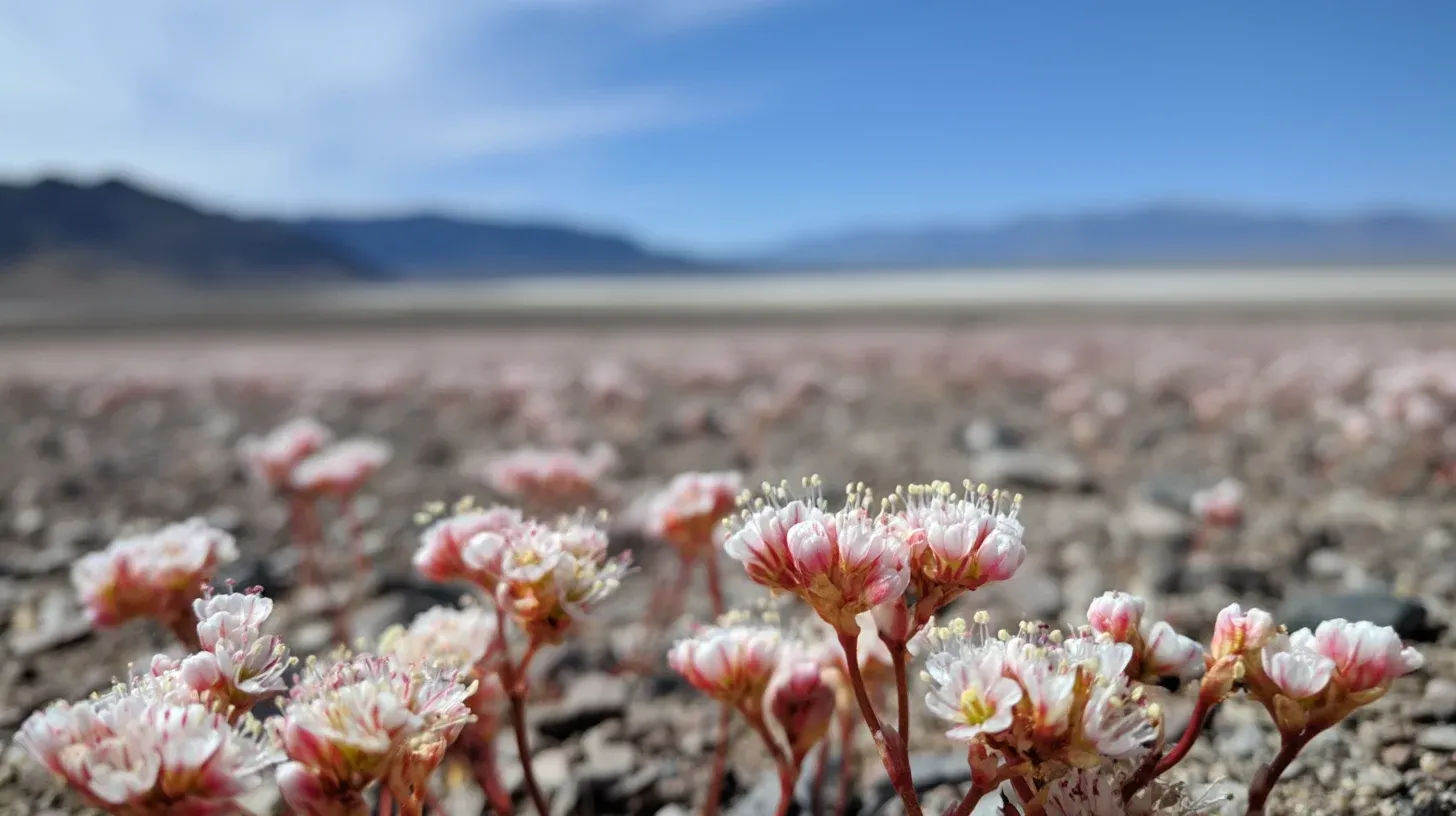
Nevada shows that logic in its clearest terrestrial form. Reuters reported on March 30 that a federal judge upheld the US government’s approval of ioneer’s Rhyolite Ridge lithium-boron mine. The legal conflict centered on Tiehm’s buckwheat, an endangered plant that exists only in a tiny area near the mine site. AP’s reporting made the stakes harder to ignore: conservationists argue the project could threaten a species with almost no spatial margin for survival. The legal answer was not to resolve that conflict first. It was to let the project move forward with mitigation measures. Nature conflict did not disappear. It was reclassified as a manageable side effect.
The old question was whether a project should go ahead at all. The new question is how to push it through fast enough to serve supply security, industrial policy, and strategic autonomy. That is the real shift. Biodiversity no longer functions as a firm limit. It becomes a problem to be administered while the machinery moves.
The deep-sea case shows the same structure on a more uncertain frontier. Reuters reported on March 29 that Glomar Minerals and Australia’s Cobalt Blue plan to build a US refinery to process nickel, copper, manganese, and other minerals from polymetallic nodules in the Pacific. The project is openly justified as part of building supply outside China. That matters because it shows what happens when conflict on one extractive front does not go away: the system does not pause. It shifts outward into terrain where the ecological baseline is weaker, the regulatory legitimacy is unsettled, and the long-term consequences are still poorly understood.
This is the broader pattern. “De-risking” no longer just means reducing dependence. It increasingly means relocating extraction into new zones of conflict under the banner of strategic necessity. Dependence on China is treated as the strategic risk that must be reduced immediately. Ecological uncertainty, by contrast, is treated as something tolerable, negotiable, or deferrable. The result is not lower risk overall. It is a transfer of risk downward into habitats, species, and ecosystems with the least political power to resist it.
That is why the usual language of resilience and security is too clean. It suggests prudence. What it often describes is a green security politics that moves faster than ecological legitimacy. Nevada and deep-sea refining are not isolated controversies. They show how nature conflict is being politically redefined. Once supply security becomes security policy, biodiversity loss and ecological uncertainty stop being reasons to pause. They become risks to be managed after the decision to extract has already been made.
The winners are easy to name: mining firms, processors, investors, and states trying to build domestic or allied mineral capacity. ioneer, Glomar, and Cobalt Blue all stand to gain from a political environment in which supply security overrides harder ecological scrutiny. The losers are also clear: an endangered wildflower with almost no room to absorb disturbance, and deep-sea environments we still know too little about to credibly call expendable.
Critical-mineral policy is therefore moving from de-risking to something more revealing: extract first, resolve conflict later. That is not just a shift in industrial policy. It is a shift in what counts as risk. The question is no longer whether ecological conflict should block a project, but how much conflict the system is willing to absorb in the name of strategic supply.
- Reuters — Judge upholds US government approval of ioneer’s Nevada lithium mine (30 March 2026)
- Associated Press — Nevada lithium mine clears major hurdle despite conservationists' worries for rare wildflower (31 March 2026)
- Reuters — US deep-sea mineral processing plant planned by Glomar, Australia's Cobalt Blue (29 March 2026)