Start Here
What is Darkside.Earth
Most of what shapes the climate crisis is hidden behind cleaner language: security, growth, transition, innovation, resilience. darkside.earth exists to follow those words down to the material systems underneath them.
Read →The New Power Is Control Over Flow
Hormuz is no longer just an oil story. As disruption around the strait pushes up plastics prices, delays fertilizer flows, and raises food-security alarms, it reveals a wider shift in how power now works. The new coercive power is no longer control over land alone, but control over flow.
Read →LATEST BY CATEGORY
Brazil and the Rare-Earth Detour
Brazil matters in the rare-earth race not because it solves Western dependence, but because the real dependence runs deeper than the mine. The real chokepoint is not geology, but industry. What matters is what happens after extraction: separation, refining, metals, magnets, and access to the industrial stages that turn ore into power. That is why Poços de Caldas matters. And that is why the conflict around it is larger than Brazil itself. The real chokepoint is not geology, but industry.
CLIMATE & ENVIRONMENTWar’s Carbon Afterlife
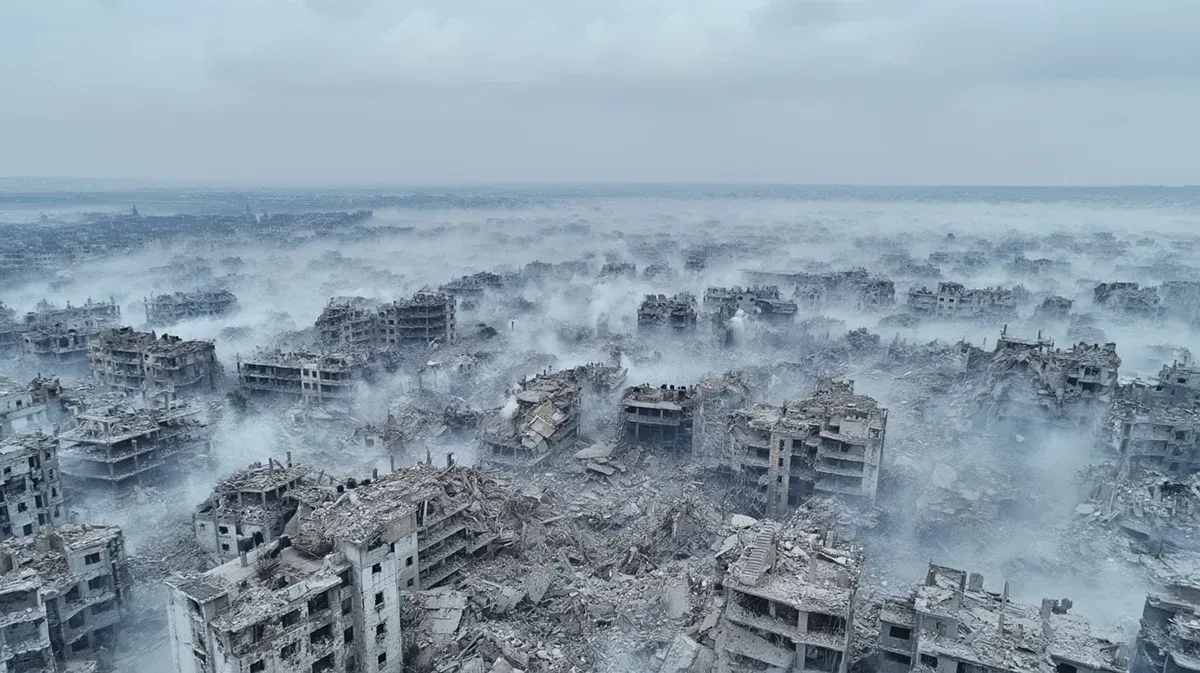
War is not only a security and humanitarian shock. It is a climate regime. The bombs emit in the moment they fall, but the larger carbon bill often sits in the ruins, the rebuilding, the rerouted shipping, and the fossil rollback that follows. That is what the first weeks of the Iran war now make harder to ignore.
GEOPOLITICSChokepoints: The Sea Lanes That Govern the World
The global economy likes to present itself as borderless, flexible, and modern. In practice, it still rests on a handful of narrow passages between seas, continents, and spheres of power. When one of those passages falters, geography becomes visible again in oil prices, freight costs, emissions, and geopolitical pressure. Globalization did not make territory less important. It concentrated dependence around a small number of routes that other actors can protect, threaten, or exploit.
POWER & ECONOMYThe Wager
The AI boom is being sold as a bet on software, chips, and scale. In reality, it rests on three physical assumptions: that electricity will stay abundant enough, that logistics will stay stable enough, and that industrial inputs will remain predictable enough to support breakneck expansion. All three are now under pressure at the same time. That is what makes the current AI race more than a technology story. It is a civilizational wager that fragile physical systems can sustain financial speed. It is a civilizational wager that fragile physical systems can sustain financial speed.
FROM THE EDITOR

This week the same question kept appearing in different forms: where does control actually sit? In Brazil, it is not in the mine. It is in the refineries, the magnet factories, and the export rules that turn ore into industrial power. Serra Verde may become a new source. That is not the same as a new command over the chain. In the Gulf, it has moved from the strait to the processing nodes. Iran struck petrochemical facilities in the UAE, Kuwait, and Bahrain. The conflict is no longer only about who gets through Hormuz. It is about who can keep the infrastructure running on the other side. The pattern is consistent. Source is not command. Access is not neutrality. And the costs of building alternatives land somewhere specific, in water systems, local communities, and workers on the wrong side of the bottleneck.
— Erik
NEWSLETTER
In-depth analysis. Independent journalism. No noise, no spin, no commercial interests.
Free. No spam. Unsubscribe at any time.