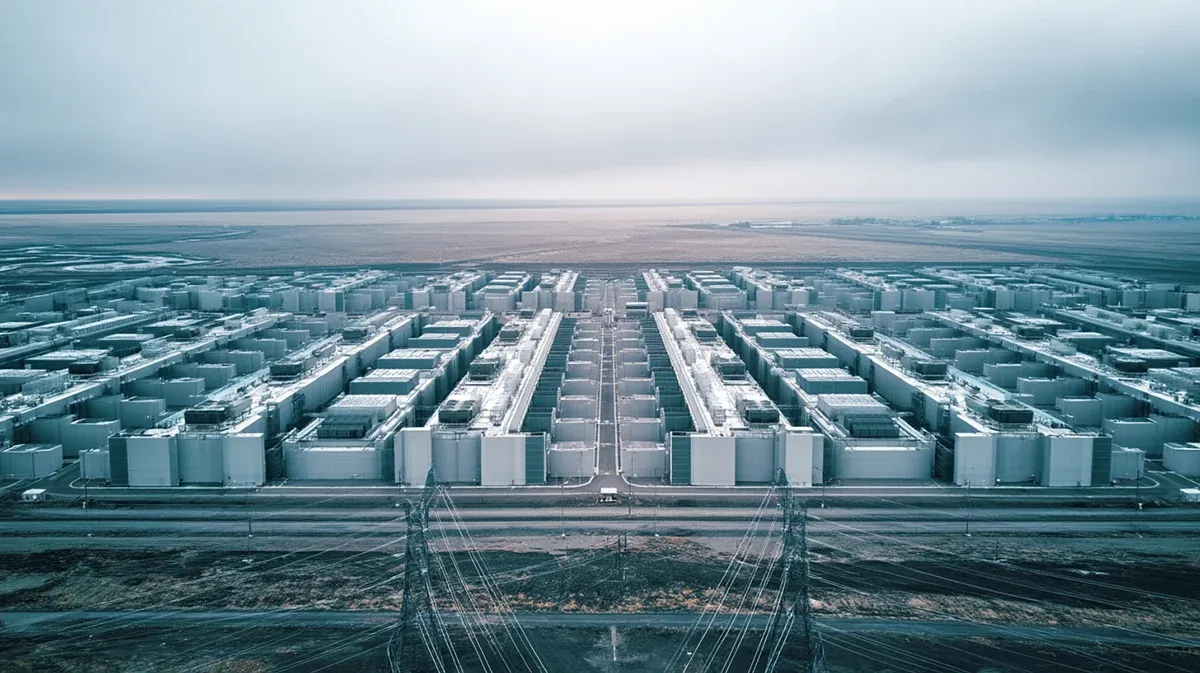
AI is no longer just a technology story. It is a fight over who gets power first, who pays to expand the system, and whose needs are pushed back when digital capital arrives at industrial scale.
That is what now makes electricity strategic infrastructure in the AI race. According to the IEA, data centres used around 415 TWh of electricity globally in 2024, roughly 1.5 percent of world electricity demand. In its baseline scenario, that consumption more than doubles to around 945 TWh by 2030, with AI as the main driver.
This is not digital growth floating above the real economy. It is an industrial power surge that is beginning to reorganize the systems beneath it.
The United States makes the scale clearer. Berkeley Lab estimates that data centres used 176 TWh in the US in 2023, around 4.4 percent of national electricity demand, and could rise to 325–580 TWh by 2028.
This is no longer a niche load. When one industry increases its power demand that quickly, electricity stops being a neutral input. It becomes a test of who the system is being reorganized for.
The likely winners are already visible: hyperscalers that can lock in giant loads, utilities that gain politically valuable customers, and actors able to secure privileged access to connection capacity. Everyone else enters the queue behind them.
But the decisive bottleneck is often not generation alone. It is the grid. More supply means little if transformers, substations, transmission lines, connection rights, and local permitting cannot deliver electricity where these facilities actually want to build.
That is why FERC has had to intervene in PJM over rules for co-locating generation and large loads such as data centres. Behind the regulatory language is the real political question: who gets to connect first, on what terms, and who pays when public networks are rebuilt around some of the richest companies in the world?
It is here that digital speed collides with physical inertia.
The decisive bottleneck is often not generation alone. It is the grid.
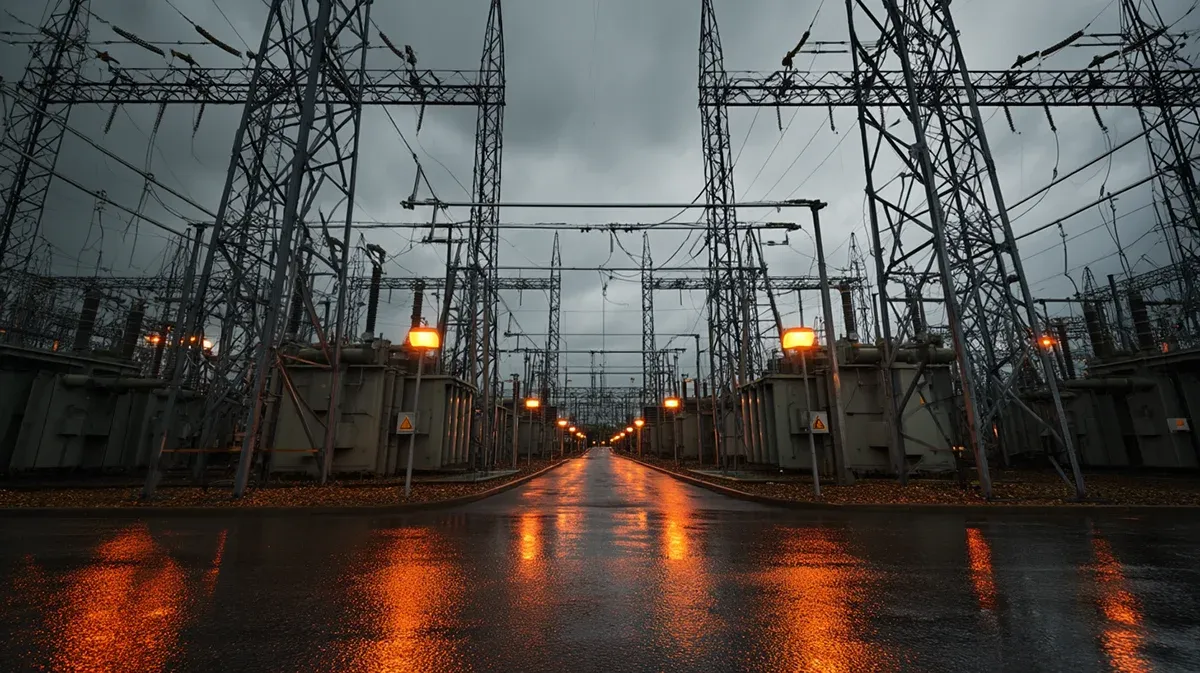
The constraint is often not abstract energy supply, but the physical grid: transformers, substations, lines, and connection rights.
The issue is no longer just strain. It is reordering. The power system risks being rebuilt around AI demand. Once connection queues, tariff design, and upgrade costs are shaped by the needs of hyperscale computing, the question is no longer just whether the grid can cope.
It is whether public infrastructure is being bent toward the priorities of a few firms with extraordinary capital, urgency, and bargaining power.
Ireland shows how visible that shift becomes when data centres absorb a large enough share of a national system. The regulator estimates they accounted for 22 percent of national electricity demand in 2024 and could reach 31 percent by 2034 if contracted demand materializes.
When one sector approaches a third of a country’s electricity consumption, the question becomes impossible to avoid: who is electricity actually for, and who gets to decide? That is no longer just growth. It is a redistribution of energy-political power.
A country begins to organize its energy system around the requirements of one sector, while households, other industries, and long-term resilience are pushed into a defensive position.
At the same time, Big Tech is moving from being a massive electricity customer to becoming a power-political actor in its own right. When Google signs agreements with multiple US utilities that allow it to curtail up to 1 GW of load during moments of grid stress, it is no longer simply buying electricity. It is entering system management.
Hyperscalers are securing flexibility arrangements, tying up large volumes of power, and gaining influence over how the system is balanced in practice. The result is not just higher demand, but a tighter concentration of energy power in the hands of the largest technology companies.
The same pattern appears in long-term power purchase markets, where AI demand can drive up prices and crowd out smaller buyers.
This is why AI sovereignty increasingly means energy sovereignty. The United States, China, and the European Union are not only competing over software, semiconductors, and compute. They are competing over the ability to build enough data-centre capacity and enough supporting energy infrastructure fast enough.
Political declarations about digital leadership mean less if the substations are full, the transformers delayed, the water unavailable, and the grid years behind. In practice, the actor that can mobilize electricity, interconnection, and physical buildout fastest gains an edge in the digital power economy.
The actor that can mobilize electricity, interconnection, and physical buildout fastest gains an edge in the digital power economy.
Digital leadership depends on physical buildout: interconnection, substations, water, land, and fast grid expansion.
And when the grid and clean energy cannot arrive fast enough, the system turns to what can. That is where the Ohio case matters. The reported plan for a 10 GW AI data-centre project paired with 9.2 GW of new gas generation and major grid investment is not just a local development story.
It reveals the central logic under time pressure: digital leadership can make fossil expansion look like the default solution rather than the exception. AI growth does not reward the cleanest power first. It rewards the fastest capacity first.
The AI boom therefore does not automatically become a motor for cleaner energy. It can just as easily become a motor for the fastest available energy.
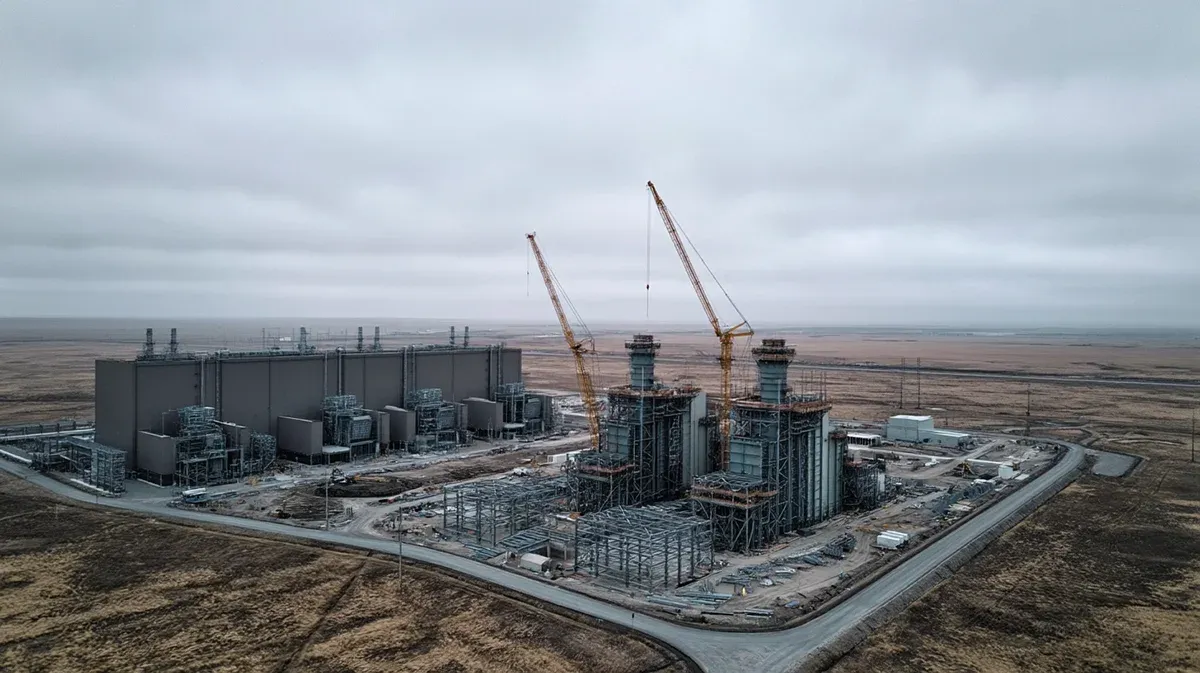
AI growth does not automatically reward the cleanest power first. It can reward the fastest capacity first.
That has consequences far beyond the data-centre sector itself. If hyperscalers can secure priority access, shape grid rules, absorb upgrade costs more easily than others, and sign deals that smaller buyers cannot match, then the costs and burdens move elsewhere.
Households may face higher tariffs if infrastructure costs are socialized. Smaller companies may be pushed out of power markets as large buyers dominate contract volumes. Local communities may inherit new lines, substations, water use, and land pressure while the strategic gains accrue elsewhere.
What is presented as digital modernization can therefore become a new hierarchy of energy access: privileged power for hyperscalers, delayed access and displaced costs for everyone else.
What is presented as digital modernization can therefore become a new hierarchy of energy access: privileged power for hyperscalers, delayed access and displaced costs for everyone else.

As priority flows upward to hyperscale demand, delays, costs, and physical burdens can be pushed outward.
This is why the struggle over AI is not only about compute, but about command over the infrastructure that makes compute possible. The actors that can secure electricity, grid access, water, and buildout fastest gain more than technical advantage: they gain the power to make public systems serve private urgency.
What looks like digital progress can therefore become an energy order in which priority flows upward, while costs, delays, and physical burdens are pushed outward.
The AI race is not just competing on top of the grid. It is beginning to decide what the grid is for.