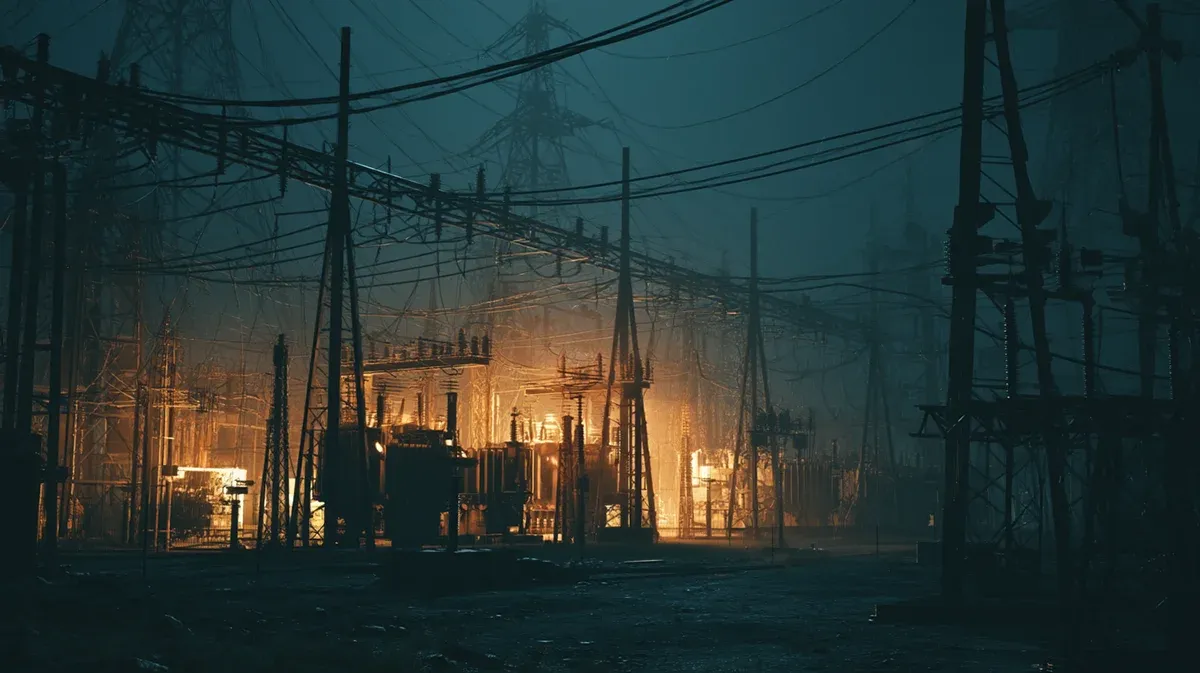
That question is becoming harder to hide because the scale is now openly industrial. Reuters reported on March 23 that NextEra had secured land in Texas for a gas plant of more than 5 GW tied to a major data-centre campus, as part of a broader setup of up to 10 GW in Texas and Pennsylvania. Reuters also reported that Meta raised the investment in its El Paso AI data-centre project to $10 billion, with expected capacity of 1 GW.
This is not digital growth in any abstract sense. It is industrial construction at gigawatt scale. AI is not merely using the energy system. It is beginning to reorganise grid investment, generation choices and local infrastructure around hyperscale demand.

The real bottleneck is not capital alone. It is whether physical systems can be expanded and redirected fast enough to serve that demand. Reuters Breakingviews reported on March 26 that Amazon, Microsoft, Alphabet and Meta are expected to spend about $630 billion on AI infrastructure in 2026, but that the real risk lies in queues and shortages: transformers, grid access, gas turbines, skilled labour and construction capacity.
The problem is not simply whether investors will keep funding AI. It is whether public and industrial systems can be scaled fast enough to sustain a private financial narrative of endless growth.
That is why local opposition is no longer background noise. Microsoft president Brad Smith said on March 24 that winning local trust has become essential because protests are rising around electricity prices, water impacts and pollution from associated power infrastructure. Reuters also reported that resistance in cities and counties across the Midwest and Northeast has already contributed to data-centre cancellations.
This is no longer a clean clash between tech optimism and public anxiety. It is becoming a distributional fight over who captures the gains of the future narrative and who inherits the infrastructure, risk and resource burden required to stage it.
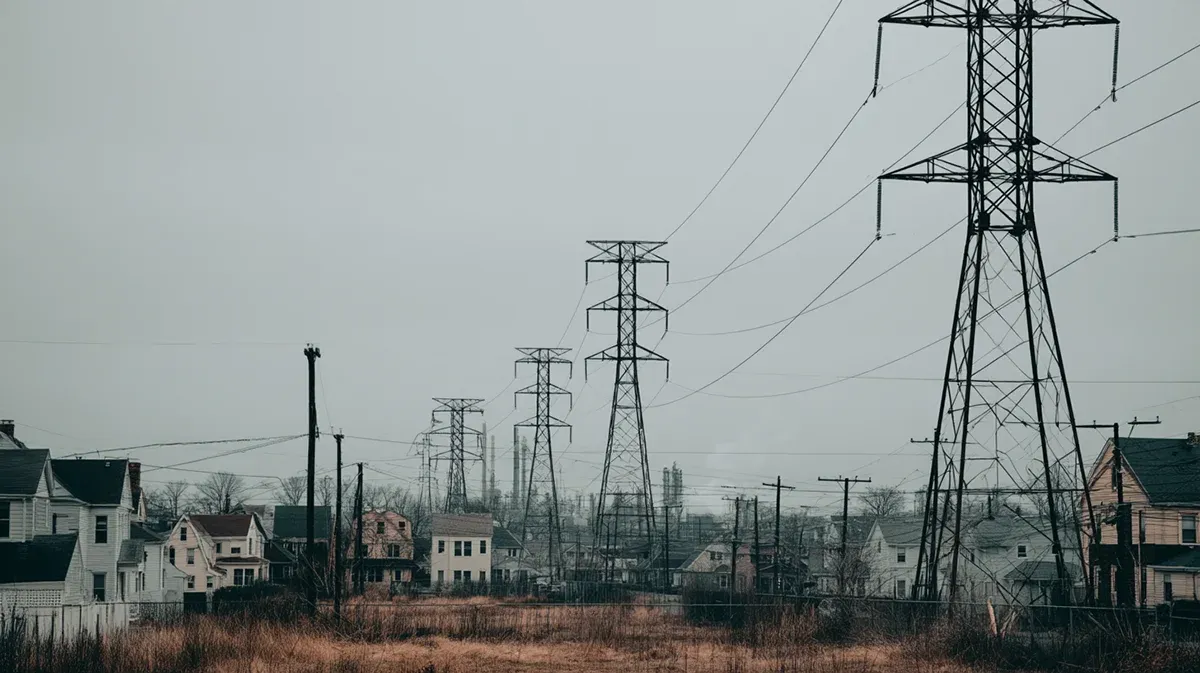
Texas shows the backlash in its clearest form. Once the buildout reaches this scale, AI stops looking like software and starts looking like a local utility war over land, rates, water and grid capacity. The Houston Chronicle reported on March 28 that Texas politicians now want scrutiny of data centres’ effects on land rights, water infrastructure, electricity bills, the grid and tax breaks.
That matters because it shows where the conflict is moving.
The real AI dispute is no longer just about technological leadership. It is about who gets to define what the power system is for.
Louisiana shows what happens when that backlash begins to force new distributional rules. Reuters reported on March 27 that Meta, in a revised agreement with Entergy, would pay its full cost for a hyperscale facility in Richland Parish. The project still triggers a large expansion of infrastructure: seven new gas plants, transmission lines, battery storage and nuclear-related upgrades. Entergy says the arrangement could produce nearly $2 billion in customer savings over 20 years.
The important point is not whether that exact model holds everywhere. It is that once a company has to prove that households are not subsidising its load, the conflict has already moved inside the system’s pricing logic.
The energy mix makes the contradiction sharper. Reuters reported on March 24 that AI-driven demand is now accelerating interest in long-duration energy storage because data centres need more stable power for longer periods than traditional battery deployment was built to provide. In Minnesota, Xcel and Google are building a package with 1.6 GW of new clean power and a 300 MW / 30 GWh iron-air battery. In Michigan, Google is planning another setup with 480 MW of storage, including 55 MW of long-duration storage.
But the same boom is also driving more gas. The same boom is pushing advanced storage and new fossil infrastructure at once, because AI demand is arriving faster than cleaner firm power can be built. The future economy is therefore being anchored, in part, in fossil backup, local resource pressure and infrastructure choices that contradict its cleaner self-image.

This is where the winners come into view. The biggest gains do not go only to the firms with the best models or the deepest capital pools. They go to the actors that can secure queue priority, special contractual terms, private generation, favourable grid treatment and the political legitimacy to demand all of it at once. Reuters reported on March 17 that data-centre demand is already driving up both the size and price of long-term power purchase agreements in the United States.
That means AI is not just consuming electricity. It is reshaping the terms on which electricity is contracted, allocated and politically governed.
The losers are easier to ignore because they are diffuse, local and politically weaker than the firms driving the load growth. They include households and small businesses facing higher system pressure or rising costs. They include communities asked to host new gas plants, transmission corridors, water-intensive cooling and the noise, traffic and land use that follow. They also include places absorbing physical risk.
Swiss Re said on March 27 that global insurance premiums linked to data centres could rise from $10.6 billion today to $24.2 billion by 2030, and that a single data centre can represent nearly $10 billion in natural-catastrophe-related losses. More than a quarter of US data-centre capacity lies in areas with significant hail risk, and more than 40 percent in areas with significant tornado risk.
The gains are privatised upward. The system costs are socialised outward.
That is the deeper political meaning of the AI buildout. Electricity is no longer only a general public input that digital firms happen to use. It is becoming an infrastructure prize allocated by scale, bargaining power and political leverage. What looks from Silicon Valley like acceleration looks from the ground like a political question with no neutral answer: who is the grid being reorganised to serve?
The local politics of AI are not a sideshow to the boom. They are where its real operating logic becomes visible. The companies keep the future narrative, but the substations, gas plants, water draw, rate pressure and insurance risk are assigned to somewhere specific. That is where the next AI conflict will be decided: not only in labs or capital markets, but in utility commissions, counties and communities being asked to reorganise local infrastructure around someone else’s digital scale. The deeper question is no longer just who builds AI first, but who gets to decide what the grid is ultimately there to serve.