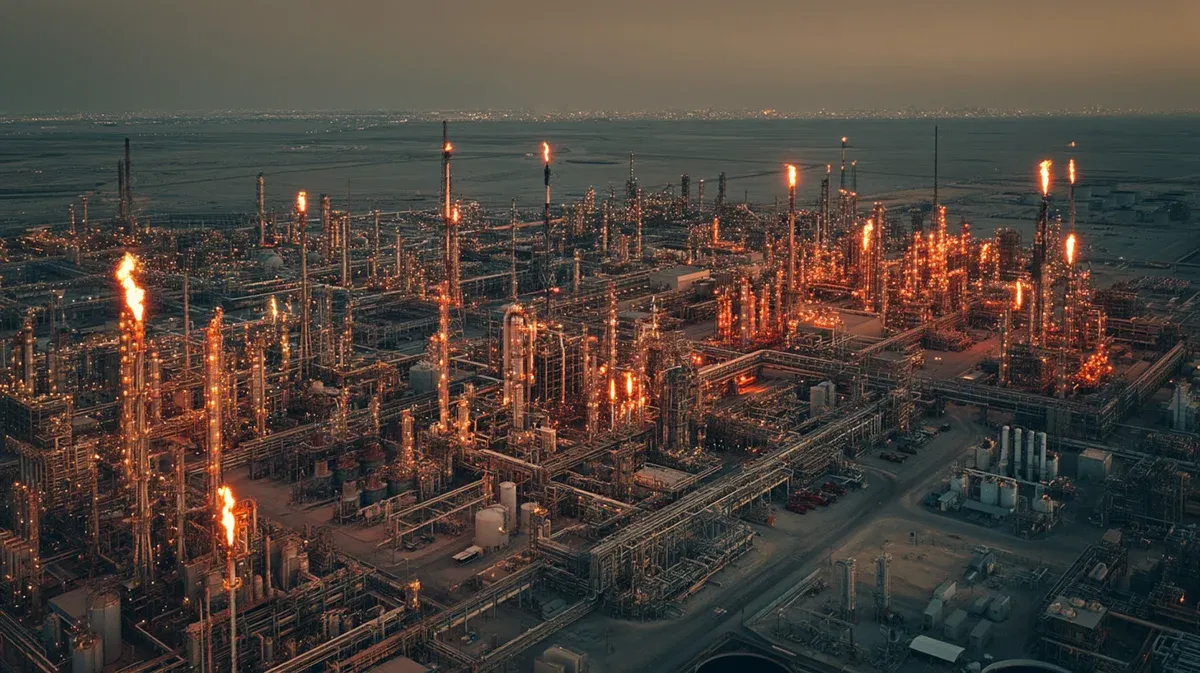
Oil has never just been a commodity. It has been state revenue, social glue, and political insurance.
That is the point often missed when petrostates are described as if they were merely export economies rather than political systems organized around rent. Oil and gas allow the state to finance itself without building a broad tax base, and that has consequences far beyond the budget.
A state that does not need to tax broadly does not need to bargain with society in the same way, and society has fewer levers with which to bargain back. It can govern from above, distribute rents, absorb social pressure, and postpone demands for representation.
Therefore weakened fossil power is not just a question of fiscal balance. It is a question of whether the state can still sustain the model that has held power together.
That is what the fossil social contract actually consists in. The state uses hydrocarbon income to fund public employment, energy subsidies, transfers, and imports, and in return secures a degree of social peace and political compliance.
The arrangement looks stable as long as revenues are strong enough to keep promises credible. But the more the state has trained society to depend on subsidized prices, government payrolls, and rent-financed protection, the harder the shock when those promises weaken.
What comes under pressure is not only spending capacity, but the state’s authority as distributor, employer, and absorber of social shock.
Iraq shows the problem in its starkest form. There, oil is not simply the dominant export. It remains the fiscal backbone of the state.
If more than 90 percent of government revenue still comes from oil, then any weakening in that income immediately threatens salaries, imports, services, and political stability. This is what petrostate vulnerability looks like in material terms: a fall in oil revenue is not confined to ministry spreadsheets. It moves through the entire social order the state is paying to maintain.
Algeria reveals the same underlying problem. When hydrocarbon revenue softens while spending commitments remain high, deficits widen not because the state has suddenly become inefficient, but because it is locked into obligations that were built on a revenue model it cannot easily replace.
The richer Gulf monarchies are better insulated, but they are not outside the same logic. Kuwait and Saudi Arabia have larger buffers, stronger creditworthiness, and more room to phase in reform. But this is not escape. It is delay under stronger conditions.
Their advantage is not that they have solved the petrostate problem, but that they have more time, more capital, and more administrative control with which to manage it.
The direction of travel is still clear: broader non-oil revenue, tighter spending, more expensive energy and water, and a smaller role for the public sector as employer of first resort.
In the Gulf, the state is not withdrawing because the rentier model has been overcome. It is trying to renegotiate that model from above, slowly enough to preserve order and decisively enough to prepare for weaker fossil certainty.
The rich petrostates’ strength is therefore not a break from dependence, but a more disciplined way to manage it. They are not leaving the fossil state behind. They are trying to preserve as much of its political logic as possible while changing the terms on which it operates.
Their advantage is not that they have solved the petrostate problem, but that they have more time, more capital, and more administrative control with which to manage it.

Wealthier petrostates can manage the pressure longer, but they still remain inside the same logic of dependence.
That is also why the word “diversification” often hides the political conflict it pretends merely to describe. In official language, diversification sounds like a technical transition from one growth model to another.
In practice, it usually means something harsher: the state must raise new revenue, charge society more directly, cut subsidies, slow public hiring, and shift risk downward while hoping that private markets and new sectors mature fast enough to prevent unrest.
Once that process begins, taxation and representation return to the center of the question. A state that must ask more of society cannot preserve the old political relationship unchanged.
Diversification is not just economic reform. It is administrative language for a deeply political redistribution of cost, leverage, and obligation.
Nigeria shows how exposed that process becomes when the ground beneath reform is already weak. The problem there is not simply declining confidence in oil revenues, but a longer failure to turn fossil wealth into robust refining capacity, broad industrial strength, or durable social protection.
Subsidy cuts and currency reforms may satisfy macroeconomic logic, but they do not automatically create social legitimacy. They may please lenders and improve fiscal discipline. But they also make everyday life more expensive, especially where imported goods, transport, and energy costs already hit hard.
Reform without protection can make the state more macroeconomically disciplined and at the same time more socially fragile. That is not just a social cost of reform. It can become a political limit to reform itself.
Nigeria shows the dangerous gap in many petrostates: the state retreats before something stable, legitimate, and sustainable has replaced it.

Reform may satisfy macroeconomic logic while making daily life materially harder.
This is where the distribution of pain becomes impossible to ignore. When fossil power weakens, elites rarely pay first. Households lose cheap fuel and electricity. Young people face narrower job markets. Public employees confront a state that can no longer hire or protect at the same scale.
Import-dependent economies feel the pressure through prices and currency weakness. The transition then becomes regressive: costs are pushed downward, while those who have long enjoyed the best access to rents, contracts, and political protection more often retain most of the shield.
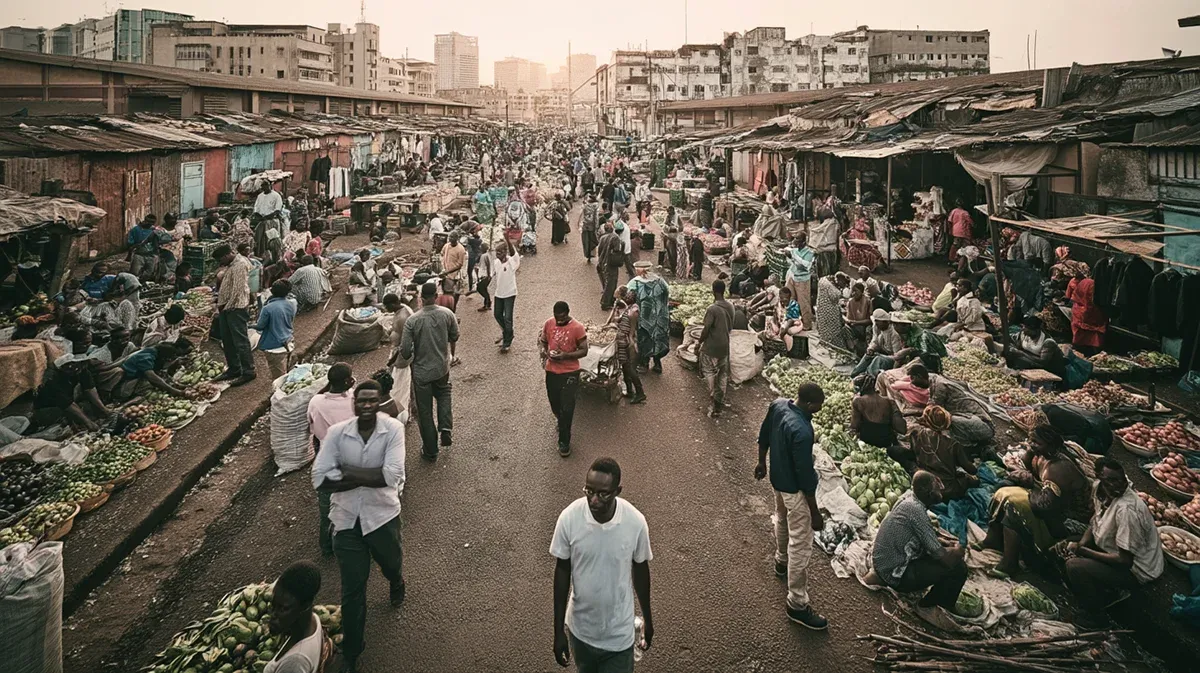
What is presented as reform from above often functions in practice as burden transfer downward.
That is why the problem is larger than the usual story about the “end of oil.” The immediate threat to many petrostates is not that hydrocarbon demand disappears overnight. It is that oil and gas revenue become a less secure foundation for fiscal stability, social pacification, and political control, while the alternatives remain costly and politically dangerous to build.
Many regimes will therefore try to maximize hydrocarbon income for as long as possible, protect market share, and postpone the hardest confrontation with society. Populations are asked to absorb higher prices and harder reforms while the state and its elites continue to rely on fossil income for as long as it still underwrites power.
The question after oil is therefore really the question of the state. If fossil rent can no longer carry wage bills, subsidies, imports, and social calm in the old way, what replaces it? More taxation? A larger private sector? More debt? Harder authoritarian control? A new social contract that distributes burdens differently?
That is where the real test begins. The decisive test is not whether the petrostate can announce new industries, but whether it can build a new way to finance legitimacy, governance, and social order.
That is far harder than talking about diversification. And that is why the pressure on petrostates is not just about declining revenue, but about whether the old way of buying stability is becoming too narrow, too costly, and too fragile to hold.