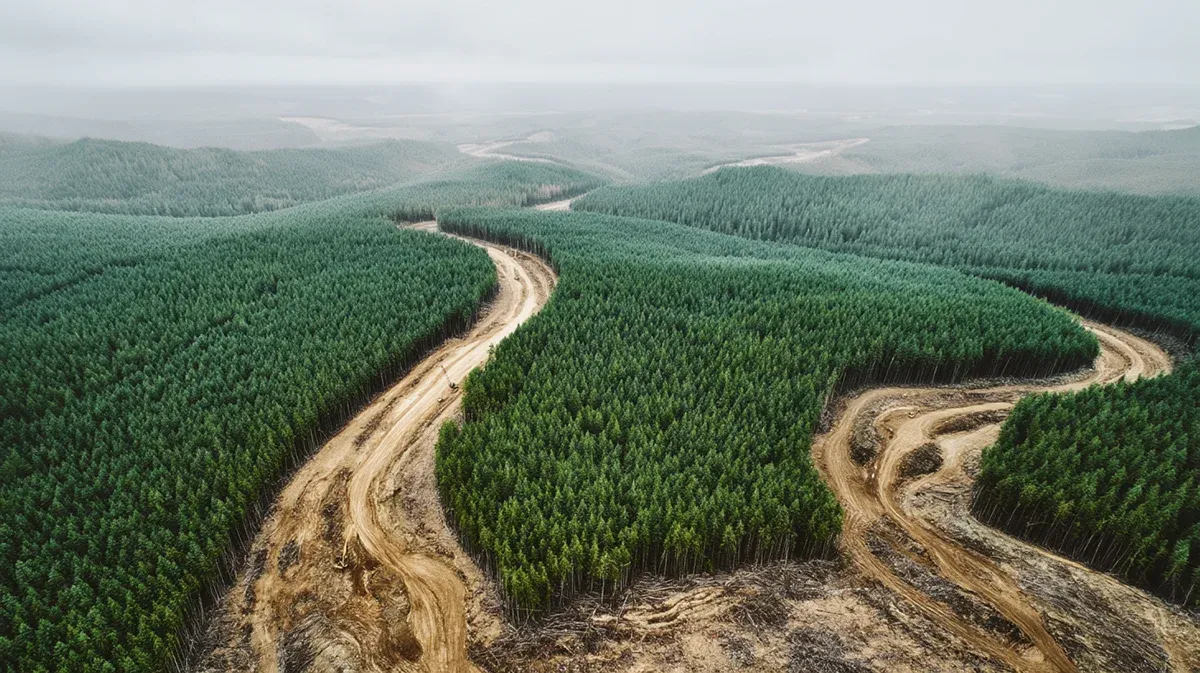
Climate promises only become real when they collide with land loss, resource conflict, and the question of who is made to carry the burden.
That is where much of the official story loses contact with reality. Green industry is often described in the language of technology, innovation, and emissions cuts. On the ground, it looks far more physical: mines, blasting, transmission lines, industrial sites, ports, truck traffic, noise, and pressure on water systems and landscapes that are already used by someone.
The transition does not replace the material weight of the old economy with something clean and weightless; it redistributes that weight onto new landscapes, new infrastructures, and new communities. What changes is not the need for land, energy, labour, and extraction, but where the pressure falls and who gets to define it as necessary.
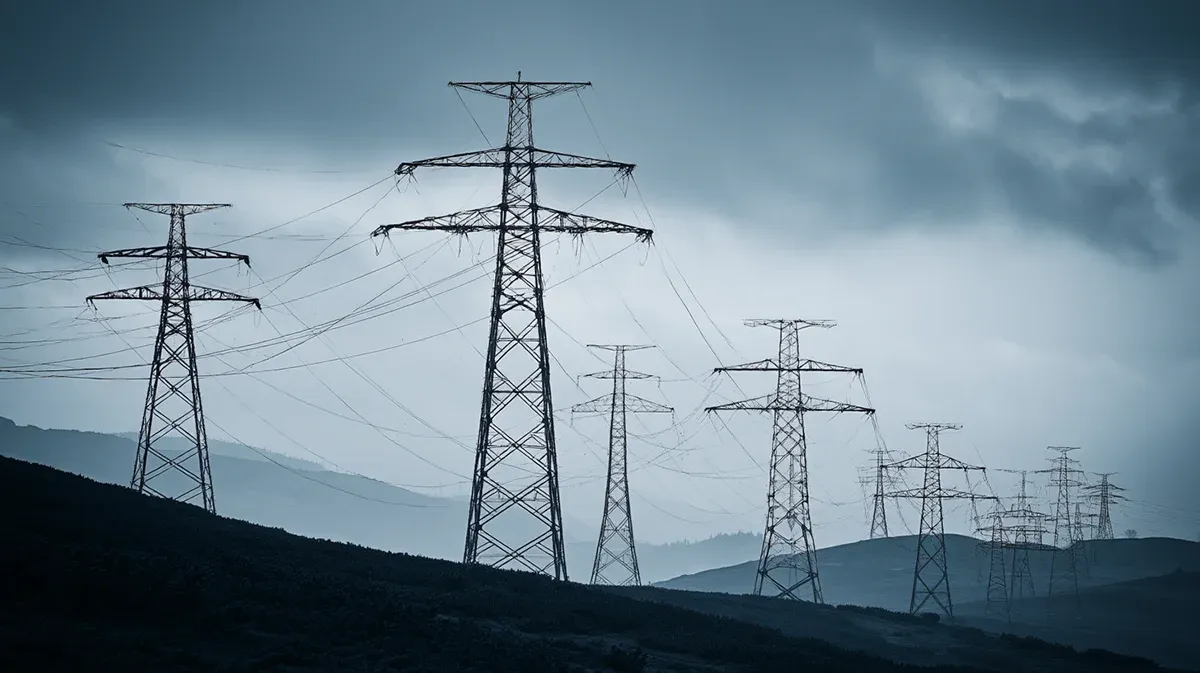
What is called green industry still arrives as land use, infrastructure, extraction, and pressure on existing landscapes.
This is why environmental damage is not an unfortunate side effect of the green project. It is often part of the model itself. Wind power requires roads, grid connections, and large areas of land. Battery and hydrogen projects require industrial space, vast amounts of power, and often significant water use.
Mineral extraction means blasting, waste, transport, and permanent pressure on local ecosystems. The green goal does not cancel hydrology, biodiversity, or terrain; it has to pass through them, and often against them. A project can look good in a national emissions ledger while being deeply burdensome for the landscape and the people living in it.
Water makes that conflict especially difficult to hide. In the lithium fields of Chile’s Atacama Desert, one of the emblematic landscapes of the energy transition, the promise of battery supply has long collided with questions about water extraction, fragile ecosystems, and the rights of Indigenous communities.
Global markets see strategic minerals. Local communities see water tables, wetlands, grazing land, and a habitat under pressure. That is the real point. This is not a technical question that can be neutralized with a polished sustainability report.
It is a distributive struggle over who gets to use resources, who gets to decide what they should be used for, and who has to live with the consequences when they are redirected.
Global markets see strategic minerals. Local communities see water tables, wetlands, grazing land, and a habitat under pressure.

What appears as strategic supply in global markets can appear locally as water loss, habitat pressure, and shrinking control over land.
That is also why local resistance is so often misread. Opposition to green industrial projects is regularly framed as ignorance, selfishness, or a refusal to accept climate necessity. In reality, it is often far more rational than that.
It emerges from unequal burden-sharing, weak participation, and a lack of control over one’s own surroundings. The people living closest to the disruption usually have the least power to define what counts as necessary, reasonable, or in the public interest.
When climate goals are used to delegitimize local criticism, something simple is happening: costs are pushed downward, while the power to define the project as necessary and unavoidable sits elsewhere. The conflict therefore becomes not only a question of environment, but of democratic legitimacy, political trust, and who gets to rule in the name of necessity.
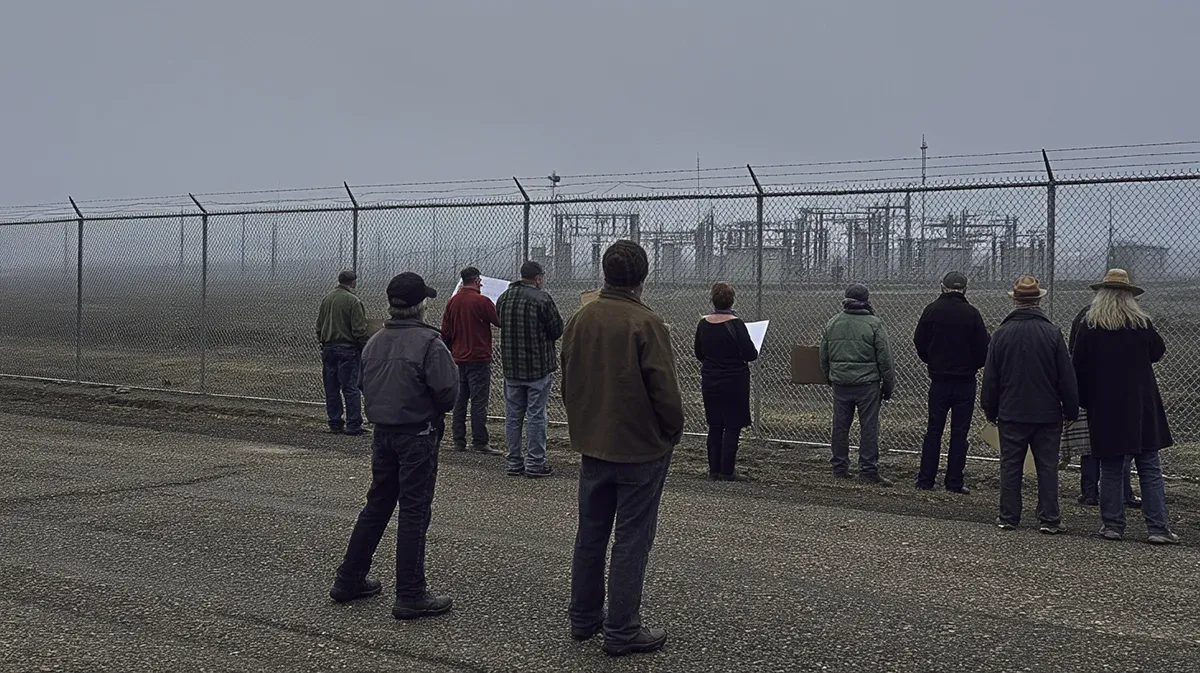
A transition built without local consent is not just unjust. It is politically fragile.
The jobs argument is supposed to close that legitimacy gap. Almost every green industrial project arrives wrapped in promises of employment, growth, and renewal. Some do create work. But the employment story is usually flatter and cleaner than the reality.
Construction phases can be large, visible, and politically useful, while long-term operations employ far fewer people than communities were led to expect. The jobs argument often functions less as an honest description of what the project will leave behind than as a political bargaining chip to secure acceptance for local disruption.
And the jobs themselves are not always as clean as the branding suggests. In mining and processing, work can still mean subcontracting, temporary labour, health risks, weak bargaining power, and exposure to harsh industrial conditions. Green industry can create work, but not necessarily enough, long enough, or well enough to justify the local burdens it leaves behind.
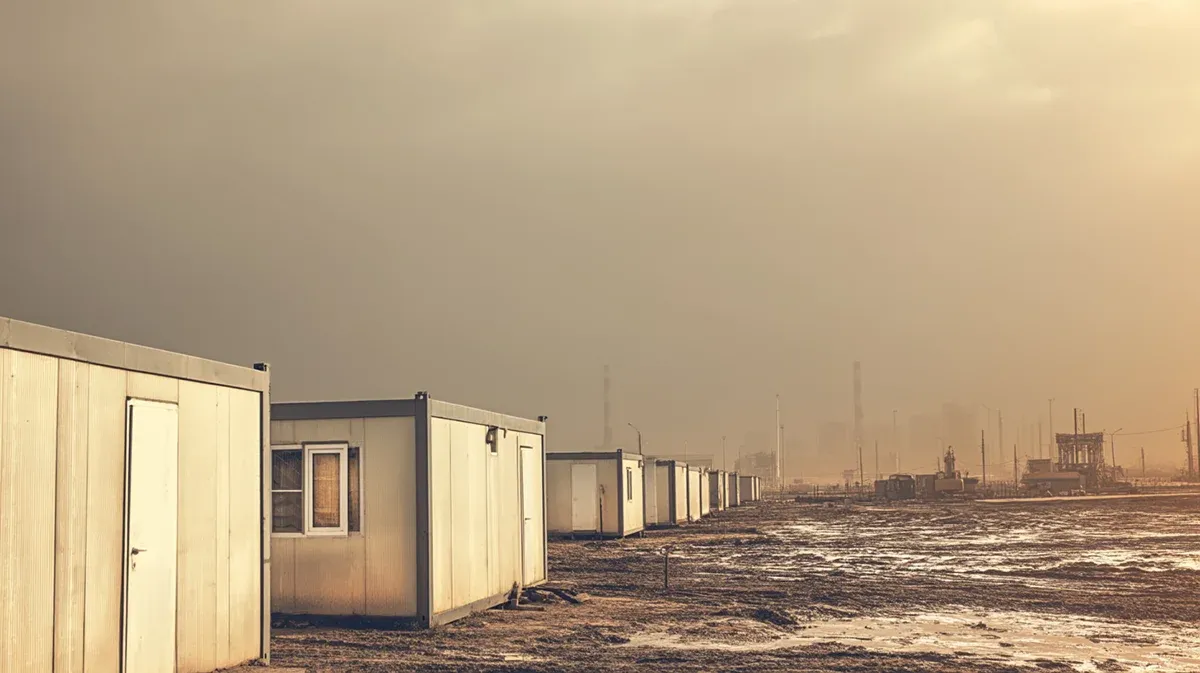
Construction jobs can be politically useful and visually dramatic without resolving the longer-term balance of burden and benefit.
Once the value chain is followed all the way back, the asymmetry becomes harder to hide. What is sold as clean technology in one place often rests on more conflict-ridden and resource-intensive activity somewhere else.
The battery marketed as part of a climate solution does not begin with sleek design or urban charging infrastructure. It begins with extraction, water use, chemical processing, heavy transport, and industrial pressure in places far from the final market.
Wind turbines and solar panels appear clean when they are finished and installed, but their material history runs through mines, refineries, energy-intensive manufacturing, and local sacrifice zones. What appears green at the centre can be far more extractive in the periphery where the materials, water, and labour are taken from.
And the periphery does not only bear more of the burden. It often has weaker control over the capital, standards, decisions, and language that determine how that burden is defined, compensated, and politically justified.
What appears green at the centre can be far more extractive in the periphery where the materials, water, and labour are taken from.
That is where the real line of division in green industry comes into view. States can extract prestige from climate leadership and industrial policy. Companies can extract subsidies, market access, and strategic position in future-facing sectors. Investors can extract value from the moral and political urgency surrounding decarbonization.
Local communities often inherit a different balance sheet: water pressure, land loss, noise, traffic, uncertain job promises, and reduced control over their own environment. Indigenous communities, farmers, fishers, and rural households can lose land, influence, or livelihoods without receiving a comparable share of the gains.
The conflict therefore is not only about climate versus nature, but about who gets to convert climate goals into power over other people’s resources, land, and labour.
That is the deeper problem with the language surrounding green industry. It often speaks as if decarbonization were a neutral technical project moving through space without friction. It is not.
It is an industrial reordering of land, water, labour, and authority. It decides whose landscapes are opened up, whose resources are redirected, whose objections are treated as obstacles, and whose interests are elevated into national necessity.
The transition may be lower-carbon than the old economy. That does not make it neutral, and it does not make it just.
The question, then, is not whether green industry is needed, but how it is built, on whose terms, and with what distribution of gain, burden, and power. A transition that repeats the old economy’s logic — where the periphery absorbs the disruption and the centre captures the reward — does not become just simply because it is green.
Green industry is not only a climate solution, but a new material economy of land, water, labour, and authority. The conflict begins when climate language no longer conceals that the green transition is also a struggle over who gets to control other people’s resources in the name of necessity.