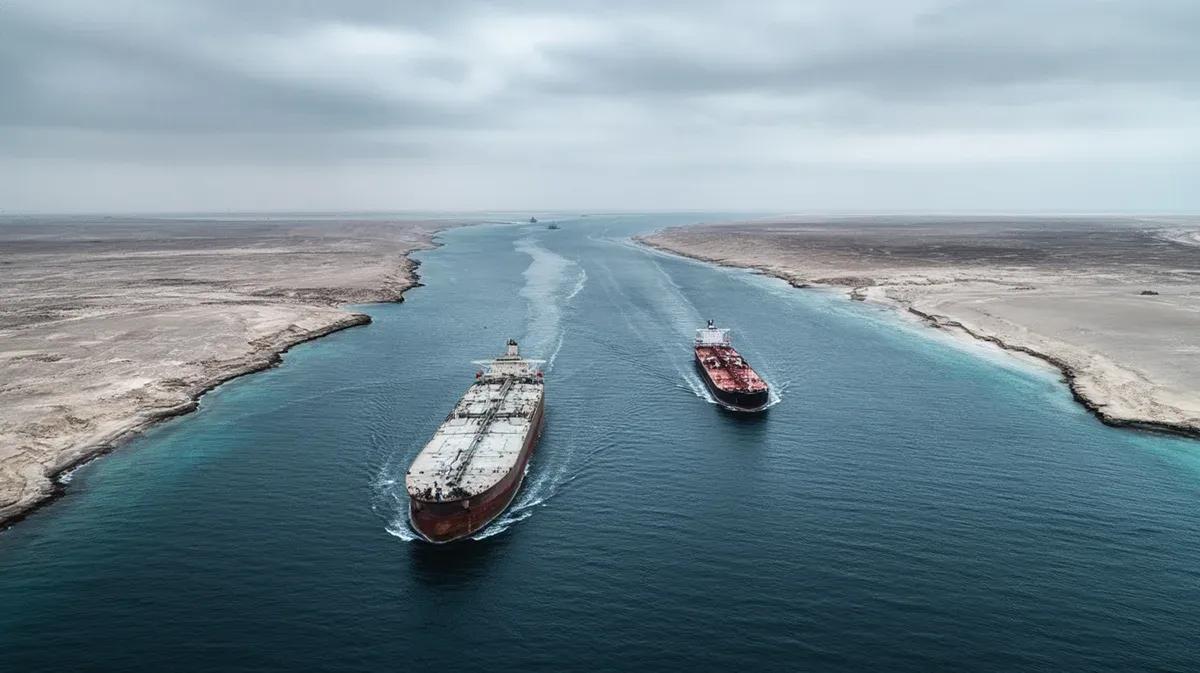
Maersk’s halt at Salalah is the clearest sign yet that this crisis has moved beyond abstract shipping risk. Reuters reported on March 28 that the company temporarily suspended operations at the Omani port after a security incident involving drone activity and explosions damaged cranes and forced an evacuation. Maersk said operations would likely be suspended for around 48 hours. Oman said on March 29 that no actor had claimed responsibility, but that an attack on its territory was under investigation.
That matters because Salalah is not Hormuz itself. It is a major regional logistics node. Once disruption reaches the surrounding port network, the message is clear: effective control over flow no longer depends on physically closing the strait itself. It is enough to make the wider operating environment unstable.
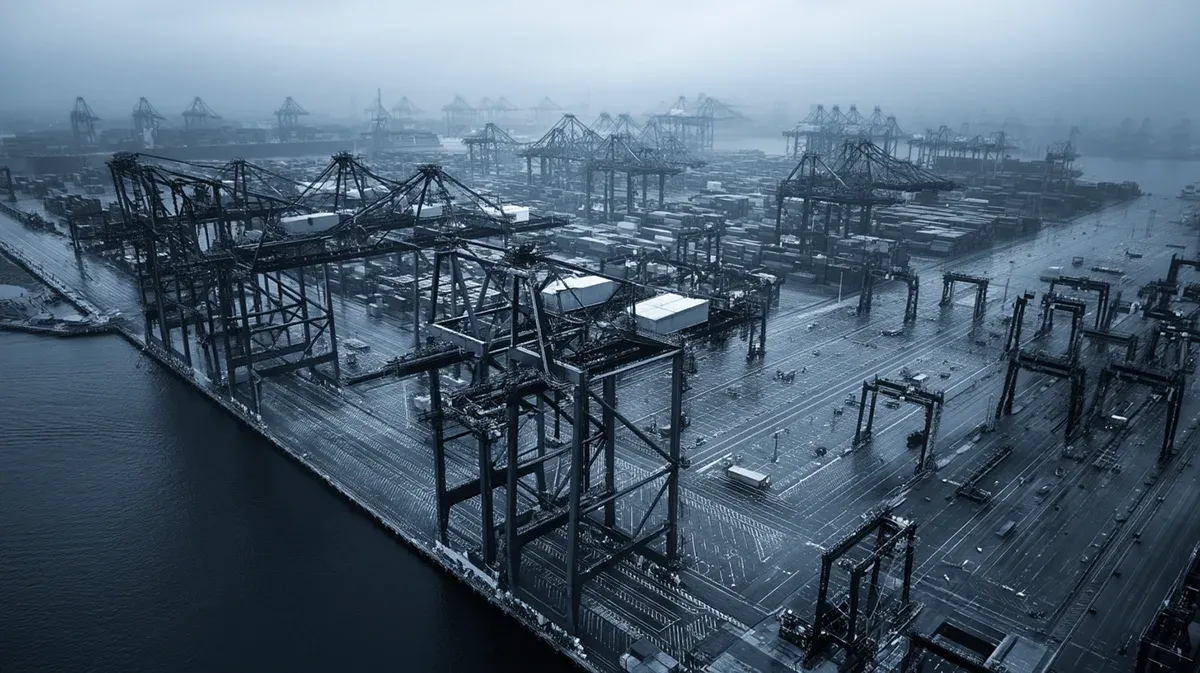
That turns Hormuz from an energy chokepoint into a lever over industrial circulation more broadly. Reuters reported on March 26 that the conflict had already pushed plastics prices to four-year highs because the Middle East accounted for more than 40 percent of global polyethylene exports in 2025. Asia and Europe are particularly exposed because they depend more heavily on Middle Eastern supply and on naphtha-based production.
The result is not confined to oil traders. It moves down the chain: from disrupted petrochemicals to higher resin prices, from resin to packaging and manufacturing, and from there into consumer costs. This is not just a war-and-oil story. It is a story about chokepoint power being transmitted through downstream value chains.
That is also why some firms gain while others pay. Reuters reported that Asian naphtha margins rose sharply and that companies including Dow, Celanese, BASF and Lanxess were passing higher costs onward, with some price increases reportedly reaching as high as 50 percent. At the same time, US producers using gas-based feedstock gained a competitive edge as Middle Eastern flows tightened.
The chokepoint does not simply destroy value. It reallocates margin, pressure and vulnerability across the chain. Alternative producers outside the bottleneck gain market share and pricing power, while import-dependent manufacturers and downstream buyers absorb the first shock.
The same pattern runs into fertilizer and food. Reuters and AP reported that disrupted fertilizer flows and higher gas prices are now threatening food prices and food security in import-dependent countries. The path from Hormuz to a more expensive household basket does not run only through the fuel pump. It runs through ammonia, urea, nitrogen fertilizers, transport and packaging.
The UN warned on March 27 that the disruption could worsen food insecurity and humanitarian crises globally. That is what makes control over flow so potent: it converts a maritime security crisis into a distributed cost shock for agriculture, manufacturing and everyday consumption.
Bahrain’s move at the UN makes the political shift even clearer. Reuters reported on March 23 that Bahrain had circulated a draft at the UN Security Council authorizing “all necessary means” to protect shipping through Hormuz. France responded with softer language emphasizing de-escalation and diplomacy.
Whatever happens to the text, the significance is already visible. A trade-route problem is now being openly redefined as a question of organised force to keep circulation open. The market is no longer assumed to be able to absorb the disruption on its own. Freedom of movement for goods is becoming something that must be actively secured, not simply assumed.
This is the deeper meaning of the Salalah incident. The real power is not just over the chokepoint itself, but over the network around it: ports, insurance, shipping schedules, terminal operations and the willingness of carriers to keep moving. Once that wider logistics system becomes insecure, full closure is not required.
The aim does not need to be total stoppage. Managed instability can be enough to raise costs, reorder routing and spread uncertainty through the chain. That is why the crisis now looks less like an isolated disruption and more like the weaponisation of circulation itself.
Mainstream coverage still tends to describe events like these as supply-chain disruption, as if neutral trade had simply run into accidental interruptions. That language is now too soft. What is happening is the conversion of trade infrastructure from a neutral conduit into a political pressure system.
Hormuz is no longer just a place where oil passes through a narrow waterway. Salalah shows that the surrounding network can now be pressured as well. Bahrain’s move at the UN shows that states are beginning to admit, openly, that markets alone cannot keep that network functioning under strain. That is the real turn in this crisis. The question is no longer only whether Hormuz can be blocked. It is whether global trade can still pretend that circulation is a commercial background condition rather than something that now has to be defended, priced and managed as a zone of conflict.