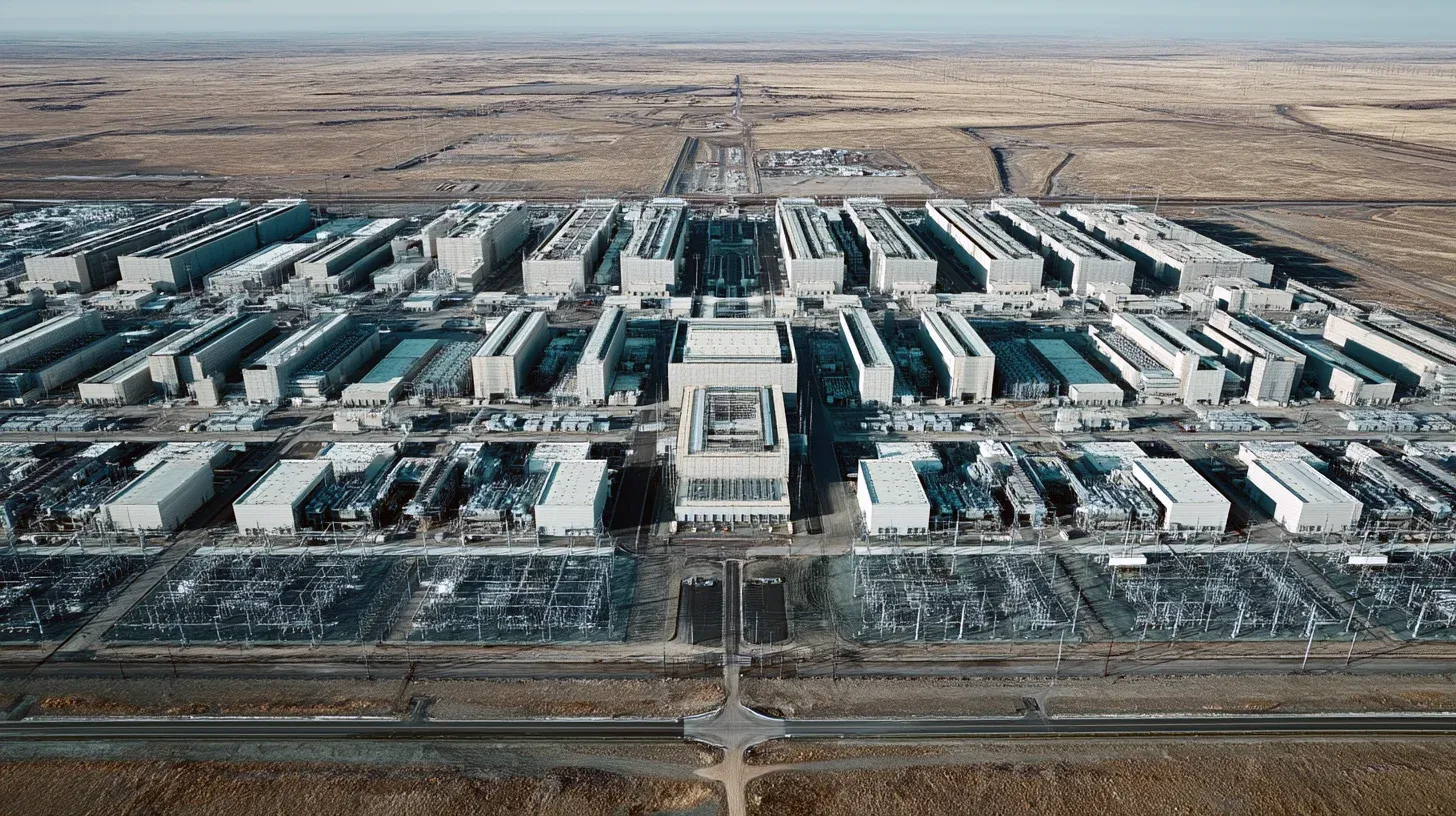
Reuters reported on March 31 that Microsoft, Chevron, and Engine No. 1 signed an exclusivity deal tied to power supply for data centres, linked to plans for gas-fired plants near major data-centre clusters. That is not just another corporate partnership. It is a glimpse of where AI infrastructure is going. The biggest firms are no longer behaving like large customers of the grid. They are beginning to act like private architects of parallel power systems.
That shift matters because the constraint on AI is no longer capital alone. Reuters Breakingviews reported on March 26 that Big Tech’s planned $630 billion AI splurge in 2026 is running into hard physical limits: transformers, turbines, grid access, skilled labour, and construction capacity. The bottleneck is no longer simply whether firms can afford to build. It is whether they can secure physical priority inside systems that cannot expand fast enough for everyone at once.
Microsoft-Chevron is the clearest response yet. If the grid is too slow, too contested, or too politically exposed, build around it. Secure generation directly. Lock in supply next to the load. Turn energy from a shared public system into a privately negotiated input. That is a larger development than the deal itself. It suggests that the leading AI firms are no longer merely scaling within existing infrastructure. They are beginning to route around it.
This is where the AI story becomes a distributional conflict. Once hyperscalers can build private energy pathways while smaller firms, households, and ordinary communities remain tied to the public system, infrastructure stops behaving like shared capacity and starts behaving like tiered access. Reuters reported in January that Microsoft launched an initiative to limit the impact of its data centres on power costs and water use, while promising to pay tariffs high enough to cover its own costs. That promise matters because it reveals the conflict underneath the public language: without special arrangements, the buildout risks shifting costs and pressure onto everyone else.
The politics are now local and material. Reuters reported on March 24 that Microsoft president Brad Smith said winning trust in US communities had become essential because data centres are increasingly associated with higher electricity demand, pressure on water resources, and the risk of higher bills. That is not a side issue. It shows that local acceptance is now part of the physical infrastructure stack. A project can fail not only because it lacks turbines or interconnection, but because communities do not want to absorb the rate pressure, land use, water draw, and industrial burden required to keep someone else’s AI expansion moving.
This is the real meaning of the new deal. AI no longer scales only through better models and more money. It scales through privileged access to energy, hardware, queue position, and political permission. And when the public system cannot deliver fast enough, the biggest firms do not wait inside the bottleneck. They build their way around it.